Board games guide: Why Board Games Are Fun for focus
"The joy of play is not merely in the winning, but in the mental engagement that occurs between the players and the board."
Board games offer a unique way to engage the brain through strategic decision-making and social interaction. This guide explains why tabletop gaming is fun, how it functions as a mind sport, and how players can use these activities to improve focus and problem-solving.
You will learn about the structured nature of competitive play, the cognitive benefits of strategy, and the limitations of these activities when applied to professional training.
* The fundamental mechanics of board game enjoyment basics. * The transition from casual play to recognized mind sports. * How tabletop games facilitate learning through games. * Ways to boost focus with board games. * Methods to solve problems with play. * Techniques to reduce stress through games.
Why Board Games Are Fun?
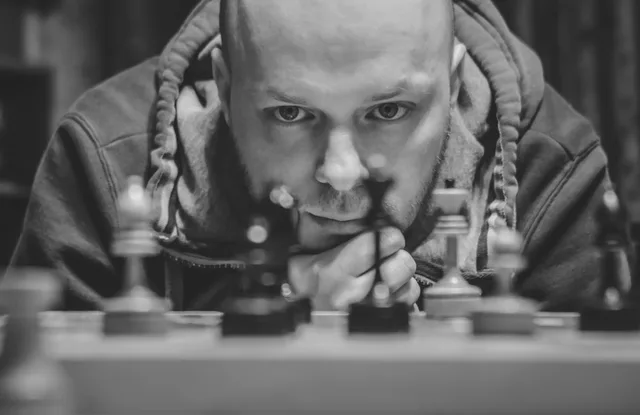
A wooden dice cup rattles on a felt-covered table as players lean in to see the outcome. The tension in the room rises when a single roll determines the next turn. Understanding the rep of why board games are fun starts with the immediate feedback provided by the game's mechanics.
According to the Entertainment Software Association, "Looking ahead, a child born in 1995, E3's inaugural year, will be 19 years old in 2014."
The core appeal lies in the structured environment where rules create predictable yet surprising outcomes. When players engage in game play and fun, they are participating in a social contract that rewards strategy and luck.
This balance keeps the brain alert and the spirit engaged throughout the session.
The sense of progression, whether moving a piece across a map or collecting resources, provides a dopamine response. This cycle of challenge and reward is a cornerstone of tabletop enjoyment. It turns a simple gathering into a meaningful cognitive event.
The joy comes from the combination of social interaction, tactile components, and the thrill of overcoming a challenge.
How to boost focus with board games?
A player sits quietly, eyes scanning a complex board to calculate the most efficient path forward. The ticking of a clock or the soft shuffle of cards creates a rhythmic backdrop to the intense concentration required.
This is how you can boost focus with board games by eliminating external distractions.
Deep engagement requires a player to hold multiple variables in their mind at once. This mental load forces the brain to filter out irrelevant stimuli, effectively training the ability to concentrate on a singular task.
The structured nature of the rules provides a boundary that helps maintain this mental discipline.
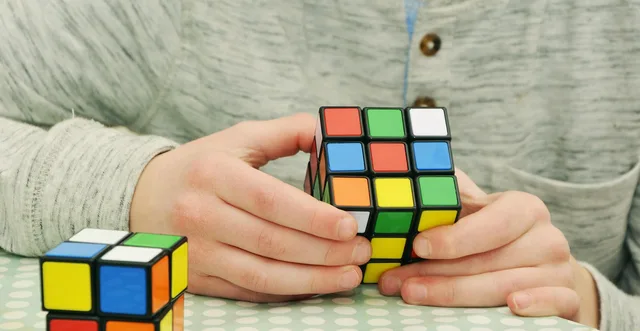
This historical context underscores the long-standing human desire to focus through structured play. By committing to the game's logic, players practice sustained attention.
To improve concentration through play, follow these steps: 1. Choose a game that requires long-term planning rather than quick reflexes. 2. Minimize environmental distractions like phones or loud music. 3. Commit to a single session without pausing the gameplay.
Can you solve problems with play?
A hand reaches for a specific tile, placing it carefully to block an opponent's move. The player pauses, weighing the long-term consequences of this single action against the immediate threat. This moment illustrates how to solve problems with play in a controlled, low-risk environment.
Tabletop games act as simulators for complex decision-making processes. Players must analyze patterns, predict opponent behavior, and adapt to changing circumstances. This iterative process of trial and error builds a mental toolkit for real-world logic.
Learning through games involves applying abstract rules to concrete scenarios. When a player encounters a difficult board state, they are forced to navigate a logic puzzle. This active engagement transforms a passive pastime into a rigorous mental exercise.
| Activity Type | Primary Cognitive Focus |
|---|---|
| Casual Play | Social Interaction |
| Mind Sports | Strategic Logic |
I found that comparing these two styles helped me understand when to relax and when to challenge myself.
Games act as safe simulations where players must analyze patterns, weigh risks, and adapt to unexpected changes in the game state.
Is it possible to reduce stress through games?
The sound of laughter fills a living room as a group of friends settles into a familiar game night. The weight of the day seems to lift as the focus shifts entirely to the colorful pieces and the unfolding narrative on the table. This is a primary way to reduce stress through games.
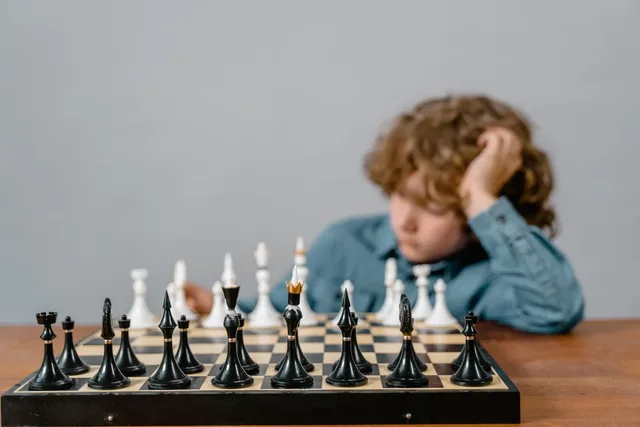
The immersive quality of a well-designed game provides a "flow state," where the player is fully absorbed in the task. This absorption acts as a mental break from daily anxieties. By focusing on the immediate requirements of the game, the mind finds a reprieve from external pressures.
The social aspect of tabletop gaming also contributes to stress reduction. Sharing a common goal or a friendly rivalry fosters connection and emotional regulation. The predictable structure of the game provides a sense of control that is often missing in daily life.
Engaging in a hobby allows the mind to shift focus away from daily anxieties and into a structured, manageable environment.
How do games become mind sports?
A professional player sits across from an opponent in a quiet hall, eyes fixed on a chessboard. The atmosphere is one of intense, silent competition, far removed from a casual family night. This transition shows how gaming evolves into recognized competitive disciplines.
According to the Collectible Grading Authority, "the Video Game Authority was a division spun off from the Collectible Grading Authority in 2008 specifically to aid in the assessment of video games."
Mind sports have gained broader recognition through organizations such as the International Mind Sports Association (IMSA), which governs major international competitions in games such as chess, bridge, draughts, go, and xiangqi.
These games are treated with the same rigor as traditional athletic sports.
Many of the games' official bodies which had come together for the Mind Sports Olympiad formed larger organizations such as the Mind Sports Council and the International Mind Sports Association (IMSA).
This institutionalization provides a framework for professional competition and standardized rules.
When players prioritize strategic depth, mastery of complex rules, and competitive ranking, a casual pastime evolves into a mental discipline.
What are the limits of game-based learning?

A student looks at a board game and tries to apply its logic to a math problem, but the connection feels forced. The specific mechanics of the game do not always translate directly to academic or professional skills. This highlights a key limitation.
While games are excellent for cognitive stimulation, they are not a substitute for formal education or professional training. The skills gained, such as tactical thinking or pattern recognition, are context-specific.
A player might excel at a specific game without being able to apply those exact mechanics to a different field.
The effectiveness of using games for specific skill acquisition depends heavily on the game's design and the player's engagement. Without intentional application, the benefits may remain confined to the tabletop.
While games are excellent for engagement, they cannot replace the depth of specialized instruction or the nuance of real-world application.
Related







Comments 0