Music composition tips: Joy of music composition guide
"The act of bringing a melody into existence is not merely about technical proficiency; it is about capturing a fleeting emotion and giving it a permanent voice."
Music composition is a creative pursuit where individuals translate abstract feelings into structured sound. This hobby offers a way to express the self through melody, harmony, and rhythm, providing both mental stimulation and emotional release.

Key takeaways include understanding the fundamental joy of creation, learning how to start without expensive equipment, and distinguishing between playing for fun and practicing for mastery.
What is music composition?
In the dimly lit studio at midnight, her fingers tremble as she weaves silence into music.
A person sits at a piano, fingers hovering over the keys, waiting for a single note to spark a sequence of sounds. This hobby involves the intentional arrangement of musical elements to create something entirely new. It is a way to build worlds out of nothing but air and vibration.
The joy of music composition comes from the ability to communicate without words. Unlike playing an existing piece, composing allows for total autonomy over the sonic landscape. It turns a listener into a creator, shifting the focus from reproduction to invention.
Creative music hobby fun often stems from the initial spark of an idea. This process turns a quiet room into a laboratory of sound. It is a deeply personal journey where every note serves as a building block for a larger emotional structure.
It is the art of organizing sounds and silence to create a cohesive musical structure.
How do you start composing? Joy of music composition
Sitting at the wooden desk at dawn, he scribbles rhythmically to capture the first spark of music.
An empty notebook lies on a desk next to a single pen, ready to catch the first few bars of a melody. Starting this journey does not require a professional studio or an orchestra. It begins with understanding how sounds interact and how to document them.
- Learn basic music theory to understand the relationship between notes and scales. 2. Start with simple melodies that can be hummed or played on a single instrument. 3. Use a basic recording device or even a voice memo app to capture ideas instantly.
A final check ensures that the ideas are recorded before they fade. This prevents the frustration of losing a beautiful sequence to forgetfulness.
- Find a small melodic fragment or a rhythmic motif.
- Develop the idea through variation and repetition.
- Establish a clear structure to house the melody.
What are the necessary tools and budget?
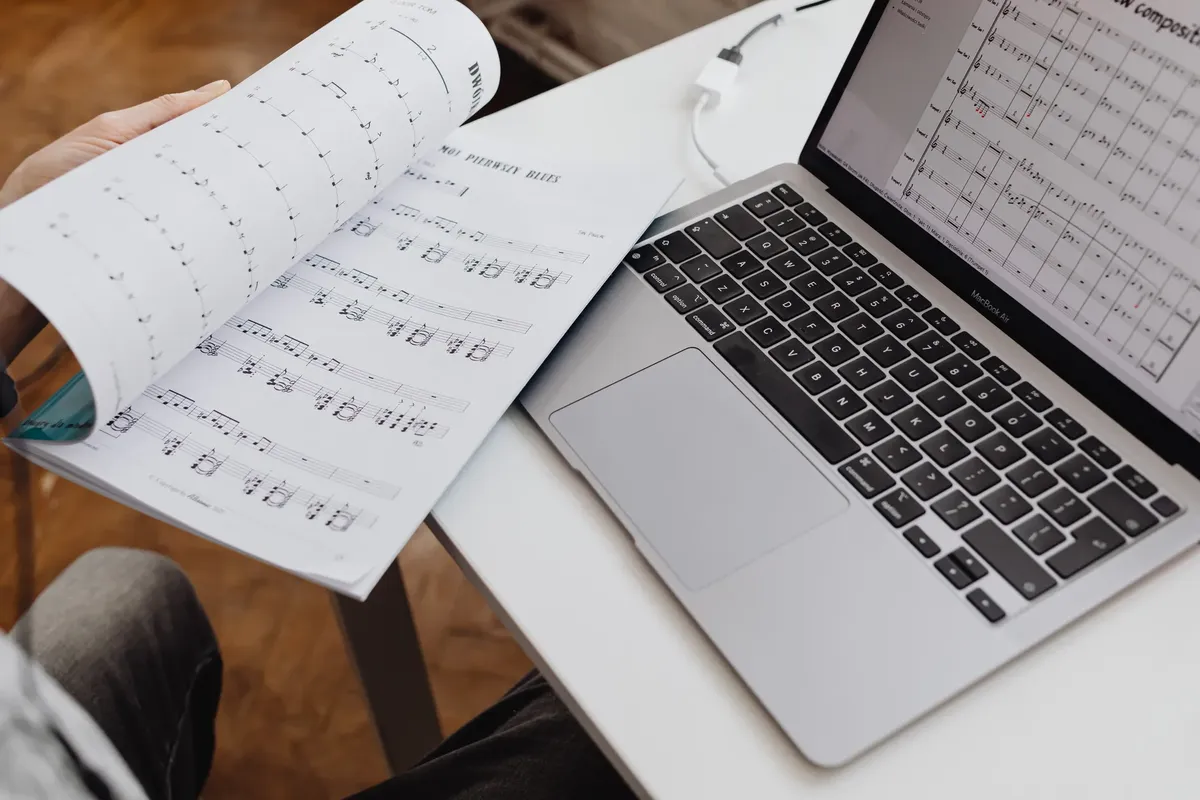
A digital workstation glows on a laptop screen, offering endless possibilities for sound manipulation. While professional gear is an option, the entry barrier for this hobby is remarkably low. You do not need a grand piano to begin exploring harmony.
For a low-budget approach, a smartphone or a basic computer is sufficient. Many free software applications allow for MIDI input and arrangement without any upfront cost. A simple keyboard or even a single acoustic instrument can serve as the primary tool for exploration.
The budget can scale as interest grows, but the initial phase should focus on the sounds themselves rather than the equipment. Most creators find that a reliable pair of headphones and a basic interface are enough to start.
In this sequence, the second step is the most extensive.
How to enjoy the creative process?
A composer hums a tune while walking through a park, capturing the rhythm of the wind. Finding joy in the process is vital to preventing burnout and maintaining a long-term interest.
One way to find joy is to set small, achievable goals, such as writing a four-bar melody every day. This prevents the overwhelm of trying to write a full symphony immediately. Sharing these tiny successes with friends or online communities can provide instant gratification.
Another approach is to focus on the process rather than the final product. Sometimes, the goal is simply to explore a new chord progression or a unique rhythm. This keeps the hobby light and prevents the pressure of perfection from stifling creativity.
Focus on the joy of discovery rather than the pressure of perfection.
How to improve your skills?
A student spends hours studying scores, marking nuances and structural shifts in a manuscript. For those who want to move beyond casual play, there are specific ways to refine the craft.

- Study the works of great composers to understand how they handled tension and resolution. 2. Practice various musical styles to expand your harmonic vocabulary. 3. Join or form small ensembles to see how your compositions translate to live performance.
I once spent an entire afternoon trying to resolve a single chord progression, and that struggle taught me more about harmony than any textbook. Mastering these elements requires patience and constant experimentation.
A limitation of this hobby is that deep technical knowledge can sometimes overshadow the pure emotional intent of the music.
Analyze the works of great composers and practice daily transcription.
The same subject is also called Why love making music.
Related
- Traditional music guide: Why enjoy traditional music
- Board games guide: Why enjoy board games for fun
How does the act of bringing a melody into existence differ from imitation? The act of bringing a melody into existence involves creating something wholly original, whereas imitation focuses on reproducing existing sonic structures. Composing allows for total autonomy over the sonic landscape, a freedom not present when simply playing a known piece. According to the Lydian Chromatic Concept of Tonal Organization, Russell argued that the Lydian mode was more compatible with tonality than the major scale (Ionian mode) used in most music.
This creative process shifts the listener's role to that of an inventor, moving away from mere reproduction. The composer uses musical elements to build a new emotional structure, unlike someone who is only practicing for mastery of another's work.
When starting, one must capture a fleeting emotion and give it a permanent voice through invention. This initial spark of an idea guides the entire journey of bringing the melody into existence, making it a deeply personal endeavor.
Imitation copies existing patterns, while true composition uses those patterns to express something unique.
What cautions should a beginner heed when bringing a melody into existence? Beginners should be cautious about letting deep technical knowledge obscure the core emotional intent of the music. The initial focus on capturing a fleeting emotion must remain paramount throughout the composition process. It is important to remember that the act of bringing a melody into existence is fundamentally about personal expression.
When starting, one must guard against the pressure of achieving immediate perfection in the resulting melody. Focusing solely on the final product can stifle the spontaneous creativity that fuels the initial spark. This caution encourages a lighter approach to the creative journey.
Understanding that the process involves building a larger emotional structure from small notes helps mitigate this pressure. The journey itself, rather than the finished composition, should be a primary source of enjoyment for the composer.





Comments 0